
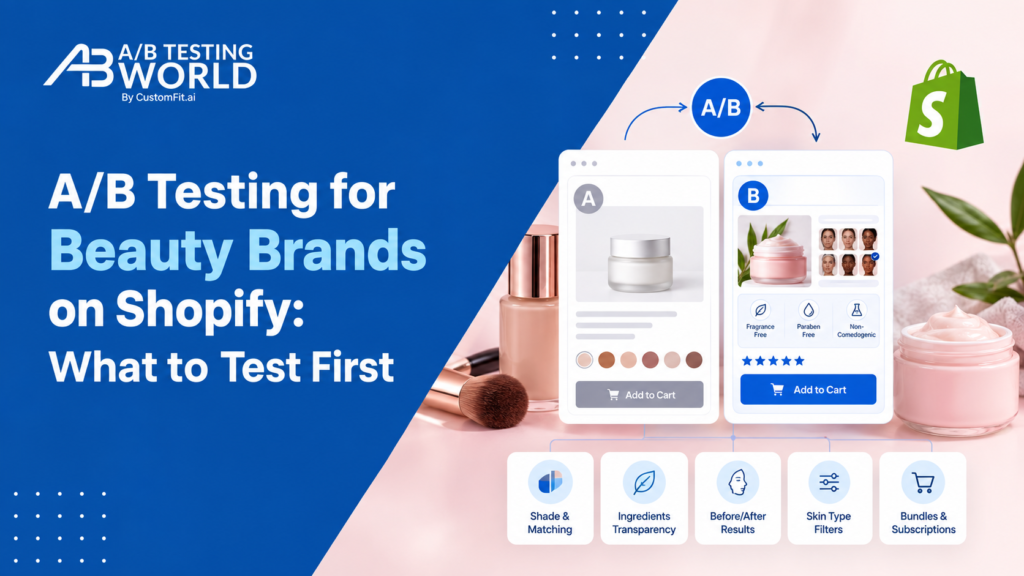
Beauty shoppers make decisions differently than almost any other ecommerce category. Skin type, concerns, ingredient sensitivities, and shade matching all sit between “I’m interested” and “I’ll buy this.” That’s exactly why Shopify A/B testing beauty brands tends to look different from generic ecommerce testing advice — the highest-impact tests aren’t about button colors, they’re about resolving the specific hesitation a beauty shopper has that a shopper buying a phone case never will.
If you’re running a beauty store on Shopify and not sure where to start testing, this is the order that tends to produce the fastest, clearest wins.
Why beauty ecommerce conversion tests need a different playbook
A generic CRO checklist treats every product category the same — optimize the hero image, tighten the CTA copy, simplify checkout. Those things still matter for beauty stores, but they’re rarely the biggest lever. The real conversion gap for most beauty brands sits earlier: shoppers arrive unsure whether a product actually matches their skin, shade, or specific concern, and the page has to resolve that uncertainty before anything else gets a chance to work.
Where to start: skincare product page testing
1. Shade and shade-matching tools. For makeup and complexion products, shade selection is often the single biggest point of hesitation. Testing a visual shade finder, AI-based shade matching, or even a simple “shades shown on different skin tones” gallery against a plain dropdown selector tends to produce some of the clearest lifts available in the category.
2. Ingredient transparency and “what’s not in it.” Beauty shoppers increasingly filter by what a product excludes (fragrance-free, paraben-free, non-comedogenic) as much as what it contains. Testing prominent ingredient callouts against a standard ingredient list buried lower on the page is a cheap, high-signal test.
3. Before/after and real-result imagery. Testing genuine before/after photography or video against purely aspirational lifestyle imagery is one of the most reliable levers in skincare specifically, where shoppers are looking for proof of efficacy, not just aesthetic appeal.
4. Skin type and concern filtering on category pages. If your catalog spans multiple skin types or concerns, testing a filter or guided quiz against a flat, unfiltered product grid usually reduces the decision paralysis that’s quietly costing you conversions on broader category pages.
Read More: Why A/B Testing Is the Cheapest Growth Lever Most Brands Ignore
Shopify beauty store optimization: platform-specific tests
1. Bundle and routine builder tests. Beauty purchases are naturally routine-based — cleanser, serum, moisturizer. Testing a Shopify bundle or “build your routine” app against product sales on an individual basis significantly raises average order value and aligns with how beauty shoppers frame their purchases.
2. The presentation of the subscription vs. one-time purchase comparison. For consumption products like skincare, testing how subscription information is communicated to the customer on the product page can greatly impact the conversion.”
3. Review and UGC placement used in Shopify applications. Testing where and how photos and reviews of customers are placed, right under the “add to cart” button or further down can have a great impact for the beauty industry due to the fact that visual evidence from real customers solve shade-matching and efficacy uncertainty questions.
4. Sample and trial-size testing. Testing the low-commitment sample size as a shopping cart add-on compared to full-size products may drive first-time customers who are not confident in buying a full-size item to try the product.
Beauty brand CRO: sequencing your test roadmap
Given limited traffic and testing bandwidth, a reasonable order for most beauty brands:
- Shade/skin-type matching tools or filters (usually the highest-friction point)
- Before/after or proof-based imagery on top product pages
- Ingredient transparency callouts
- Bundle/routine builder for your best-selling combinations
- Subscription framing and sample-size add-ons
This order prioritizes resolving the biggest source of shopper hesitation first, then moves toward tests that increase order value once the base conversion barrier is addressed.
Common mistakes beauty brands make when testing on Shopify
The most common mistake is running generic CTA and color tests first, because they’re the easiest to set up, while ignoring the shade-matching or ingredient-transparency friction that’s actually costing far more conversions. The second is testing bundle and subscription offers before fixing basic product-match confidence — a shopper who isn’t sure a shade or formula is right for them won’t convert on a better bundle offer either.
Read More: A/B Testing for SEO: Myths and Best Practices
The bottom line
Shopify A/B testing beauty brands tends to start with resolving product-match uncertainty — shade, skin type, ingredient concerns — before moving to the more standard CRO levers like bundling and subscription framing. Beauty is a category where trust and personal fit drive the purchase decision more than almost any other vertical, and your testing roadmap should reflect that from the first test you run.