A supplement shopper is carrying more quiet skepticism into a purchase than almost any other kind of buyer. Does this actually work? Is it safe? Is this brand legitimate, or is it one of a thousand near-identical bottles making similar claims? Shopify A/B testing health wellness stores requires taking that skepticism seriously as the central conversion barrier — not an afterthought behind the usual CRO checklist.
If you’re running a supplement, nutrition, or wellness brand on Shopify, here’s where testing effort tends to pay off fastest.
Why wellness and supplement stores convert differently
Health and wellness purchases sit in a category where trust has to be earned before persuasion even has a chance to work. A beautifully designed product page with weak trust signals will lose to a plainer page from a brand that clearly demonstrates credibility — third-party testing, clinical backing, transparent sourcing, real reviews from people with similar goals. Supplement store conversion testing should reflect that reality from the very first test.
Where to start: health product page tests
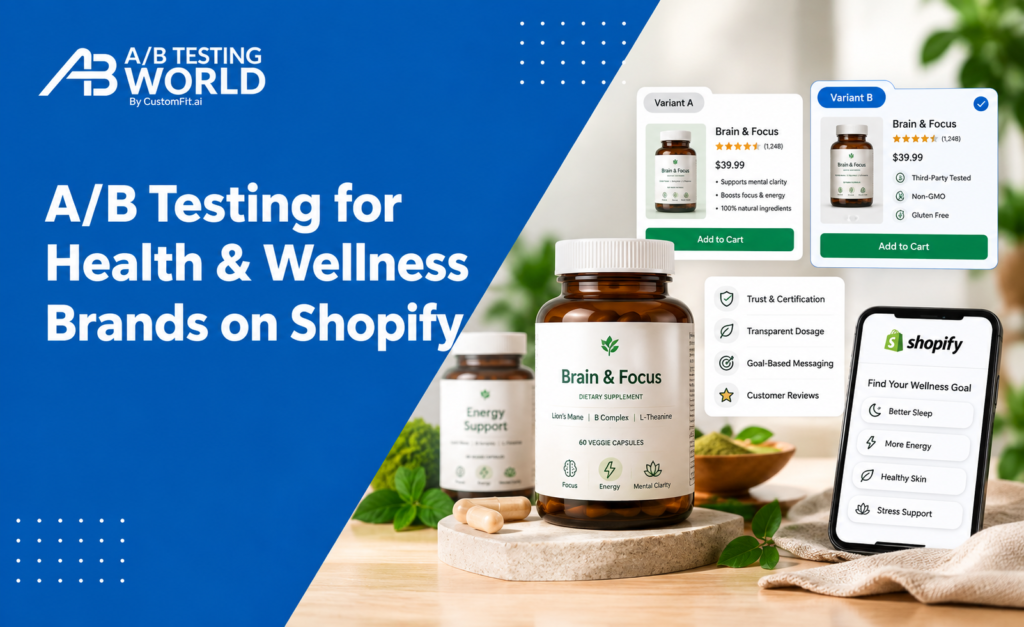
1. Third-party testing and certification badges. Testing prominent, specific certifications (not just a generic “quality tested” badge, but named lab testing or certification bodies) against vague quality claims tends to produce meaningful lifts, since specificity reads as more credible than general reassurance.
2. Ingredient dosage transparency. Supplement shoppers increasingly compare active ingredient dosages against competitors before buying. decreases indecision among more educated buyers who are already comparing products.
3. Goal-oriented framing vs. ingredient-oriented framing. Investigating whether starting with results (“better sleep”, “higher energy”) or starting with an ingredient list (“ashwagandha, magnesium glycinate”) results in more conversions may help determine how shoppers approach the process.
4. Reviews sorted by usage or goal. On this occasion, mere five star average rating does not matter as much as the reviews from individuals who started from the same place or have similar goals.
Read More: A/B Testing Your Website Copy: What Works Best for Engagement and Sales?
Wellness brand CRO Shopify: platform-specific tests
1. Framing in the Subscribe-and-Save method. Subscriptions are compatible with selling supplements but which method is used to offer them is important. Both testing how much savings from subscription is shown as percentage as opposed to dollar amount and verifying whether subscription is default option instead of optional needs to be done within Shopify or its app.
2. Bundling supplements testing. One should find out whether testing including bundle-product listings as opposed to individual product listings will significantly increase customer order value but it also helps customers feel less confused making a decision on their purchases.
3. Quiz-based product finders. For brands with a broader catalog addressing different goals, testing a guided quiz that recommends a specific product or stack against a standard browsing experience tends to perform especially well in this category, since it mirrors how a shopper would naturally describe their need to a knowledgeable person in a store.
4. Money-back guarantee placement and framing. Given the trust barrier unique to this category, testing a prominent, specific guarantee (“90-day money-back guarantee, no questions asked”) near the add-to-cart button against a generic return policy link can meaningfully reduce first-purchase hesitation.
Health product page tests: sequencing your roadmap
A reasonable testing order for most health and wellness brands:
- Trust and certification signals (the biggest category-specific barrier)
- Goal-based versus ingredient-based page framing
- Guarantee placement and specificity
- Subscription default and discount framing
- Bundle and stacking offers for AOV
This prioritizes resolving skepticism before optimizing for order value, since a shopper who doesn’t trust the product won’t be moved by a better bundle deal either.
Common mistakes health and wellness brands make
The most common mistake is leading with product benefits and lifestyle imagery before establishing credibility — in a category this skeptical, benefit claims without trust signals can actually read as more suspicious, not less. The second is testing subscription discounts aggressively before fixing weak trust signals, since a shopper unsure whether the product even works has no reason to commit to a recurring purchase.
Read More: A/B Testing for Beauty Brands on Shopify: What to Test First
The bottom line
Shopify A/B testing health wellness stores needs to treat trust as the primary conversion barrier, not a supporting detail. Certification specificity, transparent dosing, and goal-relevant social proof consistently outperform generic persuasion tactics in this category, because the underlying shopper skepticism is real and has to be addressed directly before anything else in your funnel gets a fair chance to work.