
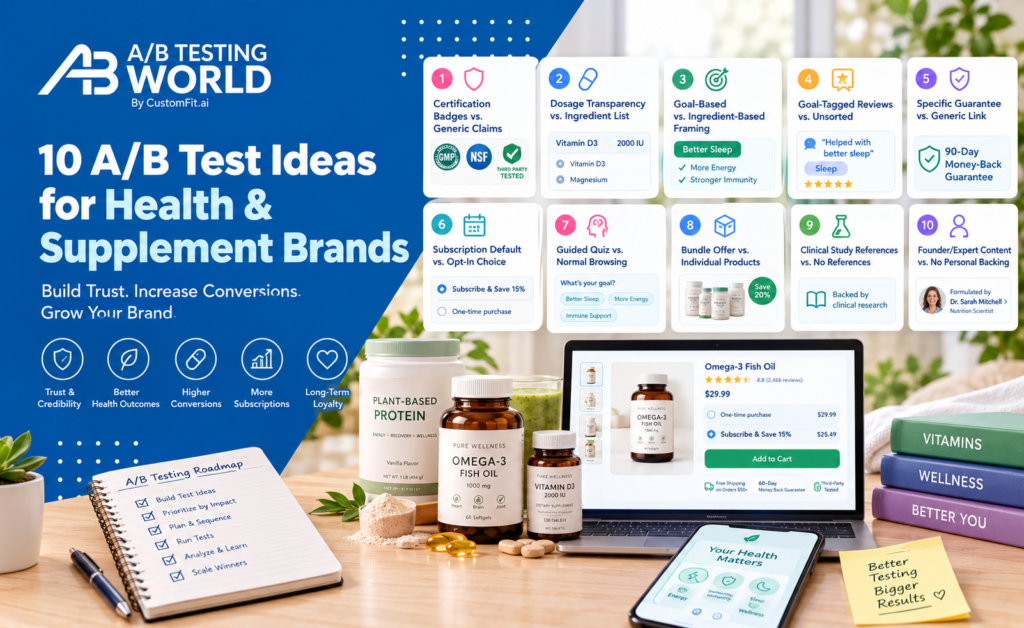
A supplement shopper is carrying more quiet skepticism into their purchase decision than almost any other kind of ecommerce buyer. These ten A/B test ideas supplement brands can run right now are ordered specifically to address that skepticism first, since trust — not persuasion — is usually the real barrier standing between a wellness shopper and checkout.
1. Third-party certification badges vs. generic quality claims
Test prominent, named certifications (specific lab testing, specific certification bodies) against vague “quality tested” language. Specificity reads as significantly more credible than general reassurance, and this is consistently one of the highest-impact health ecommerce conversion tests available.
2. Dosage transparency vs. ingredient list without amounts
Test a clear, prominent breakdown of active ingredient dosages against a page that only lists ingredients without quantities. Increasingly label-literate supplement shoppers actively compare dosages against competitors, making this a reliable test for brands with genuinely strong formulations.
3. Goal-based page framing vs. ingredient-based framing
It helps to examine the effect of starting with the outcomes such as “better sleep; “long-lasting energy” compared to starting with ingredients, such as “ashwagandha; “magnesium glycinate.” It indicates how your specific audience searches for the product by problem or for the ingredient-based knowledge.
Read Also: How Long Should You Run an A/B Test? Best Practices for Reliable Results
4. Goal-tagged reviews vs. unsorted review list
Test filterable or goal-tagged customer reviews (organized by what the reviewer was trying to achieve) against a standard, unsorted review feed. It is one of the strong tests for a supplement product page since it aids shoppers in dealing with specific types of social proof applicable to their particular case and not the general positive feedback.
5. Specific money-back guarantee vs. standard return policy link
Test a prominent, specific guarantee (“90-day money-back guarantee, no questions asked”) placed near the add-to-cart button against a generic return policy link elsewhere on the page. Given the trust barrier unique to this category, specificity and visibility both matter here more than in most other verticals.
6. Subscribe-and-save as pre-selected default vs. opt-in choice
Test making the subscription option the pre-selected default against requiring an active opt-in choice. This method has potential to boost subscriber rates significantly, but proceed with caution — if the offer is not attractive enough or the promotion appears deceptive, it may lead to higher cart abandonment rates instead of effectiveness.
Run These Tests on Your Supplement Store
Set up A/B tests without writing code. Install CustomFit.ai in 2 minutes and use every feature free for 14 days.
7. Guided quiz or stack suggestion vs. normal browsing
For companies that offer wide range of products for various wellness goals, try a quick quiz that recommends a particular product or stack against usual browsing. This approach has been especially successful in wellness as the customer will be able to express their requirements in similar way as they would with a knowledgeable person in real life.
8. Bundle or stacking offer vs. individual product listings
Test a pre-built bundle of complementary products meant to be taken together against selling each product individually. This is one of the more reliable wellness brand experiment ideas for lifting average order value, since it reduces the decision fatigue of figuring out what to combine.
9. Clinical study references vs. no references to studies available
A test with explicit references to the clinical research or studies connected with key ingredients of the product versus a page with no references to research. Just a short and simple supporting evidence explanation can enhance the credibility for customers comparing the information.
10. Founder or expert credibility content vs. no personal backing
Test including information about the founder’s or formulator’s relevant background and expertise against a page with no personal credibility signal at all. For a category this skepticism-prone, a specific, genuine expertise angle can do real trust-building work beyond product-level claims alone.
How to prioritize these ten tests
Given most wellness brands have limited testing bandwidth, a reasonable sequence:
- Trust and certification signals (the single biggest category-specific barrier)
- Guarantee placement and specificity
- Dosage transparency
- Goal-based vs. ingredient-based framing
- Goal-tagged reviews
- Clinical study references
- Founder/expert credibility content
- Subscription default framing
- Bundle and stacking offers
- Guided quiz for broader catalogs
This order prioritizes resolving skepticism before moving to order-value tactics, since a shopper who doesn’t trust the product won’t be swayed by a better bundle deal layered on top of unresolved doubt.
Common mistakes when running these tests
The most common mistake is testing subscription discounts and bundle offers early, before fixing weak trust signals — a shopper who isn’t convinced the product works has no real reason to commit to a recurring subscription regardless of how good the discount is. The second is running vitamin store A/B testing purely around aesthetic elements (layout, color, imagery style) while leaving the harder, more impactful trust and credibility tests for “later,” when they’re usually the tests most worth running first.
The bottom line
These ten A/B test ideas supplement brands can pull from are weighted deliberately toward resolving the trust barrier that defines conversion in this category — certification specificity, dosage transparency, and goal-relevant social proof consistently outperform generic ecommerce tactics, because the underlying shopper skepticism in health and wellness is real and has to be addressed directly before anything else gets a fair chance to convert.
Turn Shopper Skepticism Into Sales
Test certifications, guarantees and dosage transparency on your own store. Try CustomFit.ai free for 14 days, cancel anytime.

