Fashion has a conversion problem most other categories don’t deal with at the same scale: the product genuinely might not fit, and the shopper knows it before they buy. Shopify A/B testing fashion stores run has to account for that uncertainty directly, because sizing anxiety not indecision about the product itself is often the real thing standing between a fashion shopper and checkout.
If you’re running an apparel store on Shopify, here’s where testing effort tends to produce the clearest results.
Why fashion converts differently than most categories
A shopper buying a book knows exactly what they will receive. A shopper buying a dress in an unfamiliar brand’s sizing doesn’t, and that uncertainty shows up directly in cart abandonment and, later, in returns. Fashion store conversion tests that ignore sizing confidence and focus purely on imagery or copy tend to underperform tests that tackle the fit question head-on.
Read More: How to Set Up a Winning A/B Test: A Step-by-Step Guide
Where to start: apparel product page testing
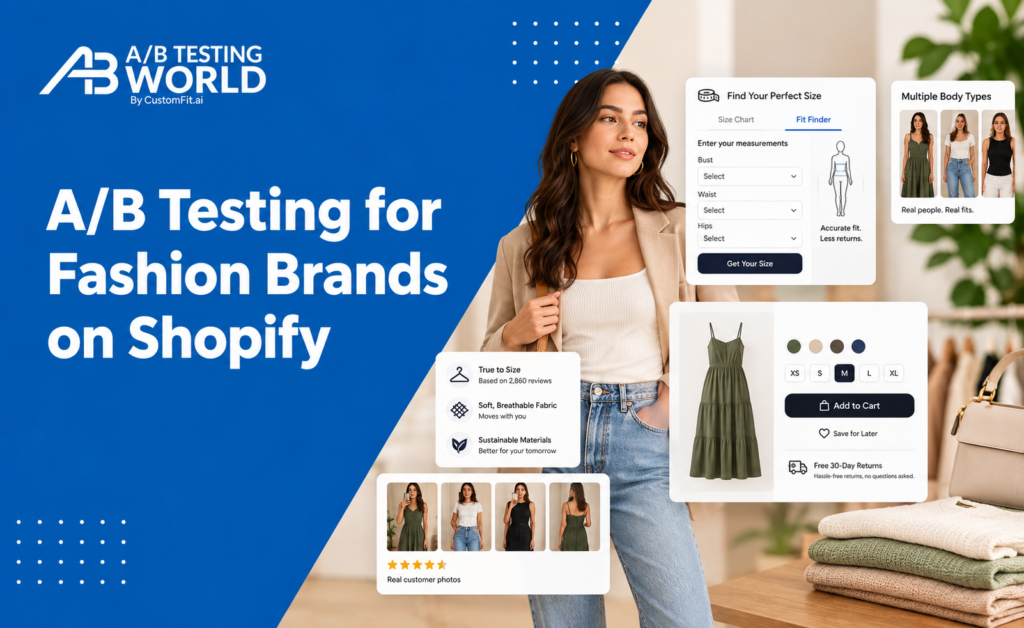
1. Size guide format and placement. Testing an interactive or visual size guide (body measurement input, fit comparison to “similar to” a known brand) against a static size chart table is one of the most consistently high-impact tests available in fashion specifically, since it directly reduces the single biggest source of purchase hesitation.
2. Model diversity and “true to size” framing. Testing product photography featuring models of multiple body types, or adding “runs small/true to size/runs large” labeling directly from customer feedback, against standard single-model photography tends to increase both conversion and reduce post-purchase size-related returns.
3. Fabric and fit detail depth. Testing detailed fit descriptions (stretch, structure, how it drapes) against minimal fabric content descriptions addresses a related but distinct hesitation not just “will this fit my size” but “will this feel and move the way I expect.”
4. User-generated content and real customer photos. Testing customer-submitted photos showing the product on different body types against studio-only photography is one of the more reliable levers in apparel, since it provides exactly the kind of real-world fit reference a shopper is looking for.
Clothing product page tests: Shopify-specific angles
1. Variant selector design. Different multicolored swatches and size selectors tested out against dropdown menus especially for mobile offers a noticeable boost simply by bringing down the number of taps and total cognitive energy necessary to select the right variant.
2. Testing out a bundle of clothing or a shop-the-look feature of a Shopify app against the listing of a single item will produce a lot of uplift, because a fashionable shopper typically thinks of his or her clothing needs in terms of outfits.
3. Return policy prominence. Given how central return anxiety is to fashion purchases specifically, testing a clear, generous return policy shown near the size guide (not just in the footer) against a policy that requires a separate page visit to find often reduces the exact hesitation sizing hesitation creates.
4. Wishlist and save-for-later functionality. Fashion purchases are frequently considered rather than impulse, especially at higher price points. Testing a prominent wishlist feature against no save option can capture intent that would otherwise leave and not return.
Size guide A/B testing: getting this specific test right
Because sizing is such an outsized factor in fashion conversion, it’s worth treating size guide testing as its own mini-project rather than a single test:
- Test static chart vs. interactive fit finder
- Test showing customer-reported fit feedback (“this runs small — size up”) vs. brand-only sizing claims
- Test where the size guide link appears (next to the size selector vs. a separate tab)
- Test whether a fit quiz recommending a specific size outperforms a self-service chart entirely
Each of these addresses a slightly different piece of sizing uncertainty, and testing them individually gives you a clearer picture of which specific friction is costing you the most conversions.
Read More: How to Choose the Right Metrics for A/B Testing Success
Common mistakes fashion brands make when testing
The most common mistake is treating fashion CRO like generic ecommerce CRO — testing headline copy and CTA button colors while leaving a static, unhelpful size chart untouched, when sizing confidence is almost always the bigger lever. The second is under-investing in real customer photography and fit feedback, relying entirely on studio imagery that doesn’t answer the “will this actually look right on someone built like me” question a lot of shoppers are silently asking.
The bottom line
Shopify A/B testing fashion brands should prioritize is anything that reduces sizing and fit uncertainty before moving to more general conversion tactics. Apparel is a category where the biggest hesitation isn’t about wanting the product — it’s about trusting that it will actually fit and look right once it arrives, and a testing roadmap that treats that as the primary barrier will consistently outperform one that doesn’t.