Fast-moving consumer goods don’t sell on a single dramatic conversion moment the way a considered purchase does. A shopper buying laundry detergent or snacks isn’t agonizing over the decision — they’re deciding whether it’s worth the effort to buy this specific brand online at all, given how easy it is to grab something similar at a nearby store. Shopify A/B testing FMCG stores needs to optimize for a different psychology: convenience, trust in consistency, and making repeat purchases as close to effortless as possible.
Why FMCG conversion is really about convenience and repeat behavior
Unlike a considered purchase, most FMCG shopping decisions are low-emotional-investment and highly habitual. The real conversion battle for most FMCG ecommerce brands isn’t winning a single sale — it’s proving that buying online is easier and more reliable than the in-store alternative, and then keeping that customer in a repeat-purchase loop. FMCG product page testing should reflect that reality rather than borrowing tactics built for higher-consideration categories.
Where to start: FMCG product page tests
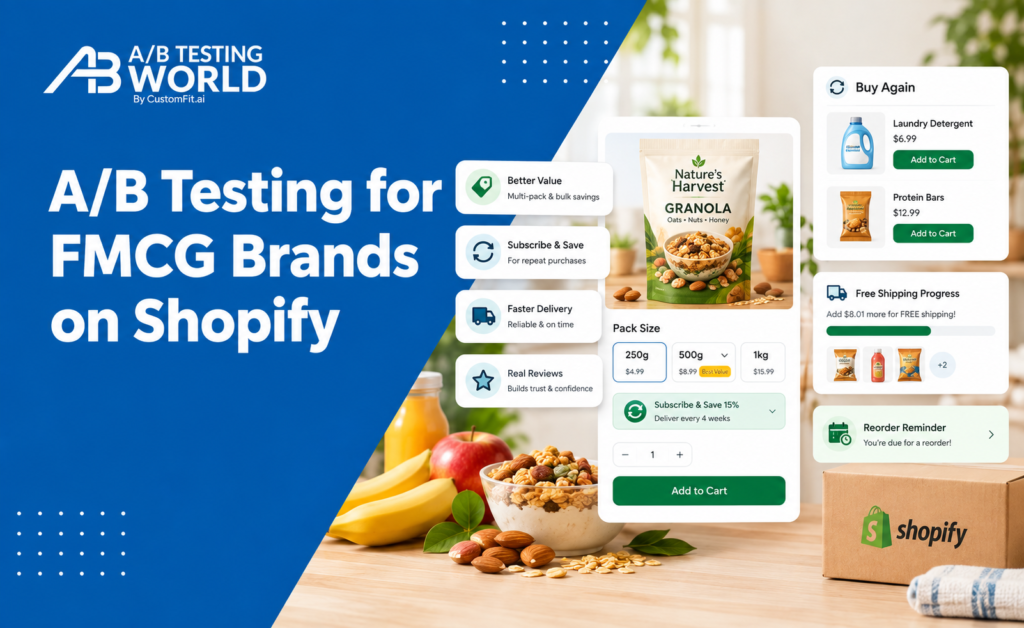
1. Pack size and value framing. Testing price-per-unit clarity, multi-pack options, and bulk savings framing against single-unit-only listings tends to matter more here than almost any other page element, since FMCG shoppers are naturally price- and value-comparison-driven.
2. Moving “buy again” to a visible position. A significant test performed on an obvious “buy again” option that is displayed on a homepage or account section, as opposed to forcing users to conduct a complete search, effectively cuts friction for a key behavior—repeat purchase.
3. Ingredient and nutrition label clarity. For food and household FMCG specifically, testing clear, scannable nutrition or ingredient information against dense, hard-to-read label images can matter for shoppers with dietary restrictions or preferences actively comparing products.
4. Messaging related to delivery speed and reliability. Comparing precise and assured delivery predictions with vague transport phrases deals with one genuine benefit ecommerce needs to demonstrate against in-store purchases: speed and certainty.
Read More: Common A/B Testing Mistakes and How to Avoid Them
Grocery conversion testing: Shopify-specific angles
1. Subscribe-and-save as the default framing. FMCG products are naturally repeat-purchase, making subscription framing tests especially valuable here. Testing subscription savings shown prominently against a one-time-purchase-only default often lifts both initial conversion and long-term retention simultaneously.
2. Auto-replenishment interval defaults. Testing the pre-selected delivery frequency (every 2 weeks vs. every 4 weeks, for example) against requiring the shopper to choose manually can meaningfully affect both subscribe rate and long-term satisfaction, since a mismatched default frequency is a common cause of subscription cancellation.
3. Free shipping threshold visibility. Testing a visible progress bar toward a free shipping threshold against no visibility at all tends to increase average order value specifically in FMCG, where adding “one more item” to hit a threshold is a low-friction decision.
4. Bundle and multi-buy discount tests. Testing pre-built bundles of frequently-bought-together FMCG items against individual listings can meaningfully lift order value, particularly for households restocking multiple related items in one order.
Repeat purchase testing FMCG: what actually drives retention
Because FMCG lives or dies on repeat purchase rate more than almost any other category, a few tests deserve specific attention beyond the initial conversion:
- Testing post-purchase email timing for reorder reminders, tied to your product’s typical usage cycle
- Testing loyalty point visibility and redemption clarity as a repeat-purchase driver
- Testing whether showing “you’re due for a reorder” messaging based on past purchase timing improves reorder rate compared to no reminder at all
These tests matter as much as, if not more than, first-purchase conversion tests for most FMCG brands, since the real revenue is in the repeat cycle, not the first sale alone.
Read More: A/B Testing for Fashion Brands on Shopify
Common mistakes FMCG brands make when testing on Shopify
The most common mistake is applying considered-purchase CRO tactics — long-form storytelling, elaborate trust-building content — to a category where shoppers want speed and clarity, not persuasion. The second is under-investment in reorder and subscription experience testing, treating the first purchase as the finish line when the real value for most FMCG brands is in the repeat-purchase cycle that follows.
The bottom line
Shopify A/B testing FMCG stores should focus on is convenience, value clarity, and repeat-purchase friction — not the persuasion-heavy tactics that work for considered categories like fashion or beauty. FMCG shoppers already know what they want; your job is proving buying it from you online is easier and more reliable than any alternative, and then making the second, third, and tenth purchase as effortless as the first.