Electronics shoppers do more research before buying than almost any other category of ecommerce customer. Specs get compared across multiple tabs, reviews get read in depth, and a meaningful purchase decision often happens over days, not minutes. Shopify A/B testing electronics stores run has to account for that longer, more analytical decision process — a category where clarity and credibility usually beat persuasion and urgency.
Why electronics conversion is a research-heavy decision
A shopper buying a pair of headphones or a smart home device is frequently comparing your product against two or three close competitors in other tabs while they’re on your site. That means your product page isn’t just trying to convert interest into a sale — it’s competing directly against how clearly a competitor’s page answers the same technical questions. Electronics product page testing needs to treat that comparison shopping as the default context, not an edge case.
Where to start: tech store conversion optimization
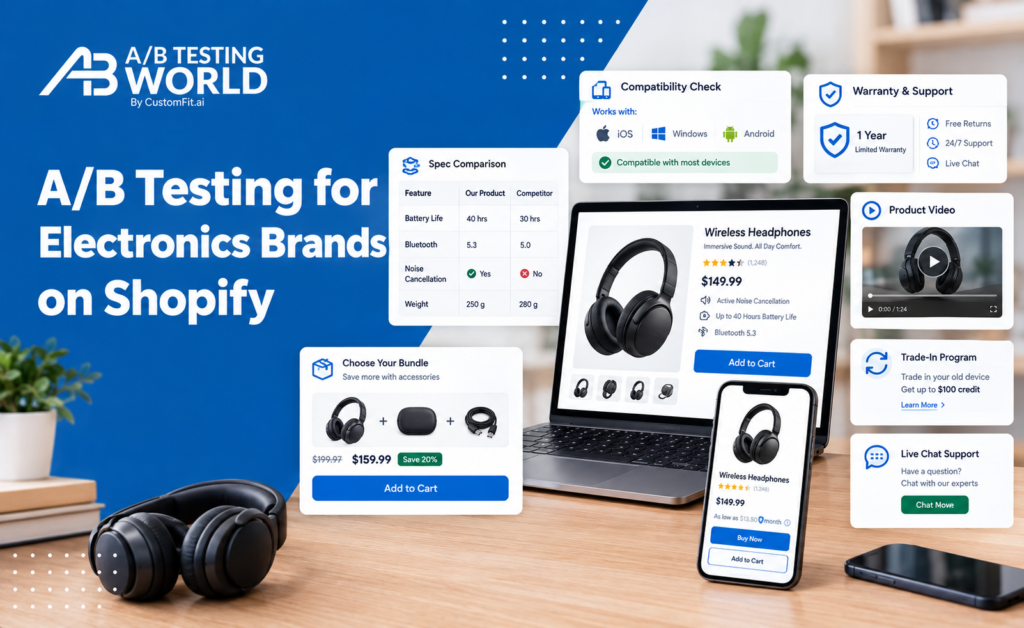
1. Spec comparison tables. Testing a clear, scannable spec comparison (either against your own product line or directly against known competitors) against a plain paragraph description tends to produce strong results, since it directly serves the comparison-shopping behavior electronics buyers already engage in.
2. Compatibility and requirements clarity. Testing prominent compatibility information (works with X operating system, requires Y accessory) against information buried in a specs tab addresses a genuine purchase risk specific to electronics — buying something that doesn’t work with what the shopper already owns.
3. Visibility of warranty and support. A clear and point warranty term, aligned with the price and add-to-cart button, and compared to just mentioning “warranty is included” can substantially improve conversion rates as electronic products are seen as more risky in terms of product failure than many other goods.
4. Video vs. image demonstration. When a company tests a video demonstration vs. a photo gallery, the results are usually especially favorable for electronics.
Read More: Landing Page A/B Testing: Key Elements to Experiment With
Gadget store CRO: platform-specific Shopify tests
1. Bundle testing with extra features. Testing a bundled product (device with important accessories) against a selection of single products would help increase average order value, especially when it comes to a device that requires shopping for additional accessories anyway.
2. Financing and installment method options. For expensive electronics, testing a visible financing message such as “as low as $X/month” against a message with pricing only can significantly increase conversion since it transforms a cumbersome purchase into an easier one to make.
3. Trade-in program visibility testing. Testing the strong message about a trade-in program against the absence of any trade-in message can help alleviate shoppers’ concerns about having to deal with disposal/selling of their current device.
4. Live chat or pre-purchase support access. Given how research-heavy electronics purchases are, testing visible access to pre-purchase support (live chat, a clear FAQ, or a “chat with an expert” option) against no direct support access can capture shoppers who have a specific question standing between them and checkout.
Spec comparison testing: getting this specific element right
Because comparison shopping is so central to electronics purchases, it’s worth treating spec presentation as its own testing focus:
- Test a full spec table against a condensed “key specs only” summary with an expandable full table
- Test showing specs compared against your own other products (helping shoppers choose within your line) versus only showing specs for the single product in isolation
- Test highlighting genuinely differentiated specs (what makes this product actually different) against a flat, undifferentiated spec list
Each of these serves a different part of the comparison decision, and testing them separately reveals which specific friction — too much information, too little differentiation, or unclear context — is actually costing conversions.
Common mistakes electronics brands make when testing
The most common mistake is relying on urgency and scarcity tactics borrowed from impulse-purchase categories, when electronics buyers are actively resistant to being rushed through a decision they’ve been researching for days. The second is under-investing in compatibility and warranty clarity, leaving genuine purchase risk unaddressed while testing comparatively minor elements like button copy or color.
The bottom line
Shopify A/B testing electronics brands should prioritize is clarity, credibility, and direct support for the comparison-shopping behavior your customers are already engaged in elsewhere. Electronics shoppers reward specificity — clear specs, real compatibility information, and genuine warranty terms — far more than they respond to urgency or generic persuasion tactics, and a testing roadmap built around that reality will consistently outperform one borrowed from a more impulse-driven category.
Read More: How Long Should You Run an A/B Test? Best Practices for Reliable Results